You’ve finally secured that golden ticket, the gorilla trekking permit. But now comes the logistical crossroads that defines every uganda safari packages itinerary: How do you actually get to the primates?
The distance between Entebbe International Airport and the thick canopy of Bwindi Impenetrable Forest is roughly 500 kilometers. On paper, that looks manageable. In Ugandan “road time,” it is a formidable 9-to-10-hour odyssey. Your choice between a rugged 4×4 overland journey and a swift domestic flight isn’t just about budget; it’s about how you value your time, your comfort, and your proximity to the wild.
The Great Logistical Debate: Road or Sky?
Choosing between the “African Massage” (the bumpy, soulful road trip) and the aerial shortcut (scheduled or chartered flights) is the most critical decision you’ll make when booking uganda safaris & tours. Both options offer radically different perspectives of the “Pearl of Africa.”
Option 1: The Overland Journey (The Scenic Route)
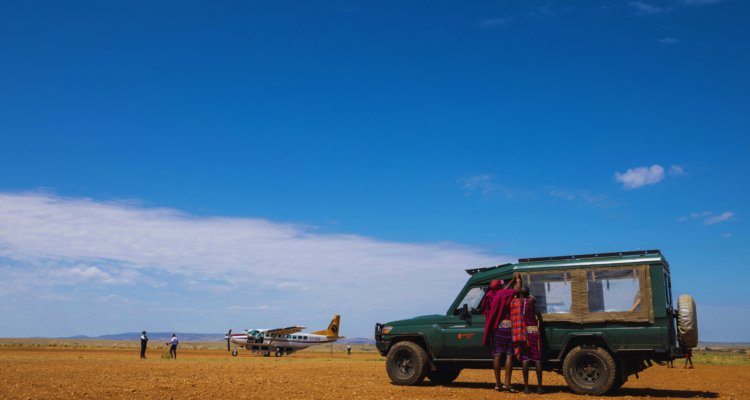
Driving from Entebbe to Southwestern Uganda is the classic safari experience. Most uganda tours and safaris utilize custom-built 4×4 Land Cruisers with pop-up roofs.
- The Route: You’ll cross the Equator, traverse the rolling grasslands of Mbarara, and eventually climb into the “Switzerland of Africa”, the terraced Kigezi Highlands.
- The Upside: It is significantly cheaper and offers deep cultural immersion. You can stop for a drum-making session at Mpambire or a long-horned cattle sighting in Ankole.
- The Reality Check: It is an exhausting day. Expect 8 to 10 hours of travel, depending on road construction and weather. For those on a “Shoestring” or “Budget” safari, this is the standard.
Option 2: Kihihi and Kisoro Charters (The Fast Track)
Domestic airlines like AeroLink and Bar Aviation have revolutionized access to the gorillas.
- Kihihi Airstrip: Serves the Northern and Eastern sectors of Bwindi (Buhoma and Ruhija).
- Kisoro Airstrip: Serves the Southern sectors (Rushaga and Nkuringo) and Mgahinga Gorilla National Park.
- The Upside: A 1.5-hour flight replaces a 10-hour drive. You arrive fresh, often in time for an afternoon community walk or a relaxed lunch overlooking the forest.
Kihihi vs. Kisoro: Which Landing Strip Do You Need?
A common mistake travelers make is booking a flight to the wrong airstrip. Uganda’s topography is no joke; landing at Kihihi when your lodge is in Rushaga results in a grueling 4-hour mountain drive, defeating the purpose of the flight.
| Feature | Kihihi Airstrip (North) | Kisoro Airstrip (South) |
| Best For | Buhoma & Ruhija Sectors | Rushaga & Nkuringo Sectors |
| Flight Time | ~70–90 Minutes | ~90 Minutes |
| Terrain | Flat, paved-ish approach | High altitude, weather-dependent |
| Hidden Catch | Often involves multiple “bus stops” | Subject to frequent morning fog cancellations |
The “Information Gain”: Hidden Costs of Flying
As an expert in uganda safari packages, I often see travelers blindsided by the logistical fine print of domestic flights. Here is what the brochures rarely highlight:
1. The Strict 15kg Luggage Limit
Domestic bush flights use small Cessnas (Grand Caravans). Space is at a premium. Most carriers enforce a 15kg (33lbs) limit, including carry-ons, and require soft-sided bags. If you show up with a hard-shell Samsonite, you may have to leave it behind or pay for an extra seat just for your luggage.
2. Airfield Transfer Fees
The flight gets you to the region, but not to the lodge. Airstrip transfers can cost anywhere from $50 to $150 per vehicle. Unlike an overland tour where your driver-guide is with you from Day 1, fly-in safaris require “ground handling” at the destination.
3. The “Middle-of-the-Day” Void
Scheduled flights often arrive mid-morning and depart early afternoon. This can sometimes create “dead time” at the airstrip or lodge that an overland traveler uses for transit. However, for Luxury Safaris, the trade-off for physical comfort is almost always worth it.
Time vs. Budget Scaling: Calculating Your ROI
When evaluating uganda safaris & tours, consider your total trip duration.
- Short Excursions (3-Day Safaris): Flying is non-negotiable. If you drive, you spend two full days in a car for just one hour with the gorillas. The ROI on a flight here is massive.
- Long-Distance Safaris (10+ Days): If your itinerary includes Lake Mburo and Queen Elizabeth National Park, an overland circuit makes more sense. You break the journey into manageable 3-hour chunks, seeing more wildlife along the way.
The Verdict: Which Should You Choose?
Choose Overland if:
- You are on a budget or a “Shoestring” adventure.
- You want to see the Equator and local markets.
- You have 5 or more days to spare.
- You enjoy the “raw” feel of African road travel.
Choose Airstrip Charters if:
- You are booking a Honeymoon Package or Luxury Safari.
- You have limited time (3–4 day trips).
- You have back issues or find long drives physically taxing.
- You want the spectacular aerial views of the Virunga Volcanoes.
Frequently Asked Questions
Is it safe to fly to Kisoro?
Yes, but Kisoro is a high-altitude airstrip surrounded by volcanoes. Pilots are highly trained, but flights are frequently delayed by morning mist. Always build a “buffer” into your international connection if flying back from Kisoro.
Can I do a “Fly-Drive” combo?
Absolutely. This is a popular choice for many uganda safari packages. Fly from Entebbe to Bwindi to start your trek fresh, then have your driver-guide meet you there to drive back through Queen Elizabeth National Park for a wildlife safari.
How much do domestic flights cost in Uganda?
Expect to pay between $280 and $450 for a return ticket between Entebbe and Kihihi/Kisoro, depending on the season and carrier.
Whether you choose the dust of the road or the clouds of the rift, the end goal remains the same: a face-to-face encounter with the mountain gorillas. At gorillatrekking-uganda.com, we specialize in tailoring these logistics to your specific needs. Ready to fly or drive? The choice is yours.
 >
>