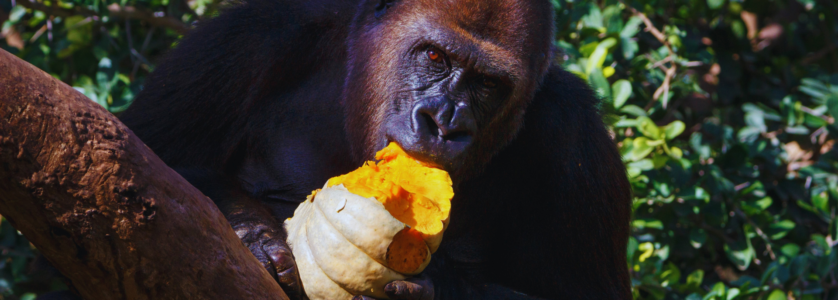
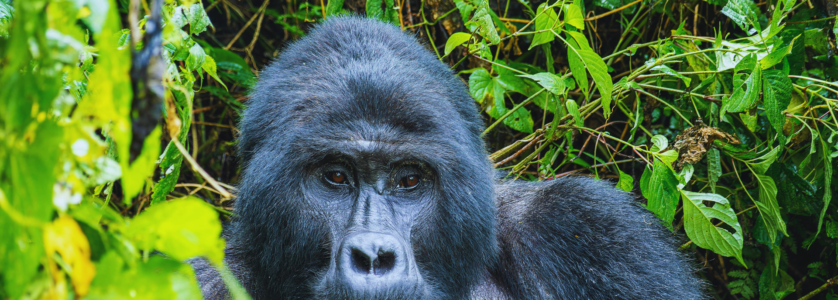
You’ve spent thousands on high-end glass, flown across the globe, and hiked through tangled vines for hours. Then, it happens: a 400-pound Silverback emerges from the emerald shadows. You raise your camera, but your light meter is screaming, your lens is fogging, and the “Bwindi Mist” is turning your high-speed shutter into a blurry mess.
Gorilla trekking in Uganda is the ultimate bucket list item for wildlife photographers, but Bwindi Impenetrable Forest is not a monolithic environment. The northern sector (Buhoma) and the southern sector (Rushaga) offer radically different lighting conditions, moisture levels, and canopy densities.
If you want to move beyond “lucky snapshots” to professional-grade portraits, you must understand the micro-climates of these two specific regions.
The Light-Metering Reality: Bwindi vs. Mgahinga
Before we compare the Bwindi sectors, a technical benchmark is necessary. Photographers often mistake “open forest” for “jungle.” In Mgahinga Gorilla National Park, the canopy is more open, often allowing for $1/500s$ shutter speeds at ISO 800.
Bwindi is a different beast. Inside the “Impenetrable” forest, the light-loss is staggering. You are effectively shooting in a natural cathedral with green-tinted stained glass. In the dense brush of Rushaga, you can expect a 2 to 3-stop light drop compared to the more established, slightly more open trails of Buhoma.
Buhoma: The Low-Altitude “Golden Hour” Sector
Buhoma sits at a lower altitude (approx. 1,400m) compared to its southern counterparts. For uganda gorilla trekking, this is often considered the “luxury” gate, but for photographers, it means specific technical advantages.
1. Direct Light Penetration
Because Buhoma is lower and the valley floor is wider, the sun hits the forest floor earlier in the morning. You’ll find more “dappled” light here. While dappled light can be a nightmare for high-contrast shadows, it allows for lower ISO settings (around 1600–2500) during the peak hours of 10:00 AM to 12:00 PM.
2. Humidity and Lens Fogging
Buhoma is generally warmer. The temperature differential between your air-conditioned safari vehicle (or lodge) and the forest is less extreme than in the south. This means less internal lens fogging, a critical factor when you only have 60 minutes with the gorillas.
Rushaga: The Moody, High-Altitude Challenge
Located in the southern sector at altitudes reaching 2,000m+, Rushaga is the land of the “Gorillas in the Mist.” It is the prime location for the Gorilla Habituation Experience, giving you four hours of shooting time, but the micro-climate is demanding.
1. The “Green Constant”
The canopy in Rushaga is incredibly dense. Even at noon, you are often working in deep shade. Your camera’s sensor will hunt for focus against the low-contrast, dark-green fur of the gorillas against even darker green foliage.
Pro Tip: Set your White Balance to “Shade” or a custom K-value of 6000-6500. The forest floor has a heavy green cast that can make gorilla skin tones look sickly if left on Auto White Balance.
2. Moisture and Bokeh
Rushaga is wetter. Period. The frequent drizzle creates “atmospheric perspective”, that beautiful, hazy depth that separates a subject from the background. If you can manage the moisture, the bokeh in Rushaga is far more ethereal than the drier Buhoma tracks.
Technical Comparison: Photography Outlook
| Feature | Buhoma (North) | Rushaga (South) |
| Average Altitude | 1,400m – 1,600m | 1,900m – 2,400m |
| Light Levels | Moderate (Dappled) | Low (Deep Shade/Mist) |
| Typical ISO Range | 800 – 3200 | 2500 – 6400+ |
| Primary Lens Choice | 70-200mm f/2.8 | 50mm or 85mm f/1.2 – f/1.8 |
| Atmospheric Style | High Contrast / Vibrant | Moody / Atmospheric / Soft |
| Trek Difficulty | Moderate | Strenuous |
Optimizing Your Gear for the Micro-Climate
To succeed in gorilla trekking Uganda photography, your gear needs to be as resilient as your legs.
- Fast Glass is Non-Negotiable: If you are carrying an $f/5.6$ kit lens, you will struggle. An $f/2.8$ is the bare minimum for Bwindi. Prime lenses ($f/1.4$ or $f/1.8$) are secret weapons in Rushaga for melting away the distracting “wall of green” vines.
- Weather Sealing: Don’t just rely on the “weather-resistant” claim of your camera body. Bring a dedicated rain cover. The micro-climates can shift from bright sun to tropical downpour in under three minutes.
- The Microfiber Rule: Keep a dry microfiber cloth in an accessible (and dry) pocket. In the high-humidity Rushaga sector, you will be wiping your front element every ten minutes.
Choosing Your Sector: The Verdict
If you prefer clean, sharp, and vibrant portraits with a higher chance of manageable light, Buhoma is your best bet. The lower altitude and slightly more “behaved” weather patterns make for a predictable shoot.
However, if you are an artist seeking drama, soul, and the iconic “mist” aesthetic, you must head south to Rushaga. Just be prepared to push your sensor to its absolute limits and embrace the grain of high-ISO photography.
Frequently Asked Questions
Is there a best time of year for gorilla photography in Uganda?
The dry seasons (June–August and December–February) offer the most stable light. However, the “short rains” in October can produce stunning, saturated greens and dramatic clouds that many professionals prefer.
Can I use a flash during gorilla trekking?
No. Flash photography is strictly prohibited as it can startle or provoke the gorillas. You must rely entirely on your camera’s low-light performance and fast apertures.
Should I bring a tripod or monopod?
A tripod is too cumbersome for the dense Bwindi brush. A monopod can be useful, but most photographers prefer shooting handheld with Image Stabilization (IS/IBIS) to stay mobile as the gorilla family moves.
Which sector is better for the Gorilla Habituation Experience?
The Habituation Experience currently takes place in the Rushaga sector. This gives photographers four hours with the gorillas, providing ample time to wait for those rare moments when the light breaks through the canopy.
 >
>